The Art of Deliberate Boredom: How Embracing the Void Leads to Hyperfocus and Mastery
In a world addicted to dopamine and constant connectivity, the most contrarian path to top-tier success is also the most uncomfortable one: Deliberate Boredom.
While we often view boredom as a failure of entertainment, elite performers and spiritual masters view it as a gateway. It is the necessary friction that precedes the “Hyperfocus” state—a mental mode identical to the Flow State, achieved not by chasing excitement, but by enduring a planned, boring period of sensory deprivation.
This concept is universal. It is the “Deep Work” of the modern programmer, the Khelwa (solitude) of the Sufi mystic, and the Dharana (concentration) of the Yogi. Here is how this singular mechanism powers success across every dimension of human life.
The Mechanism: Why Boredom Triggers Hyperfocus 🔗
The modern brain is overstimulated. When we constantly feed it information, it never needs to generate its own. “Deliberate Boredom” acts as a system reset. By removing external stimuli—notifications, music, conversation, entertainment—you force your brain to seek stimulation internally.
This transition is painful. The first 15–20 minutes of a “planned boring period” feel agitated and dull. However, if you push through this “boredom barrier”, the brain switches gears. It enters Hyperfocus: a state where attention locks onto a single target with laser precision. This is where complex problems are solved and breakthroughs occur.
The Tech Perspective: DHH on Flow and “The Manager of One” 🔗
In a recent interview on the Lex Fridman Podcast (July 2025), David Heinemeier Hansson (DHH)—creator of Ruby on Rails and CTO of 37signals—elaborated on the absolute necessity of this state.
DHH argues that the best work isn’t produced by “hustling” through fragmented schedules, but by protecting long, uninterrupted stretches of time. He describes a form of coding and problem-solving that requires entering a deep “flow state”, where the external world disappears. For DHH, this isn’t magic; it is a discipline. It involves rejecting the “noise” of modern enterprise—meetings, chat apps, and status updates—to create a quiet, almost “boring” environment where the mind can grapple with complex logic without distraction.
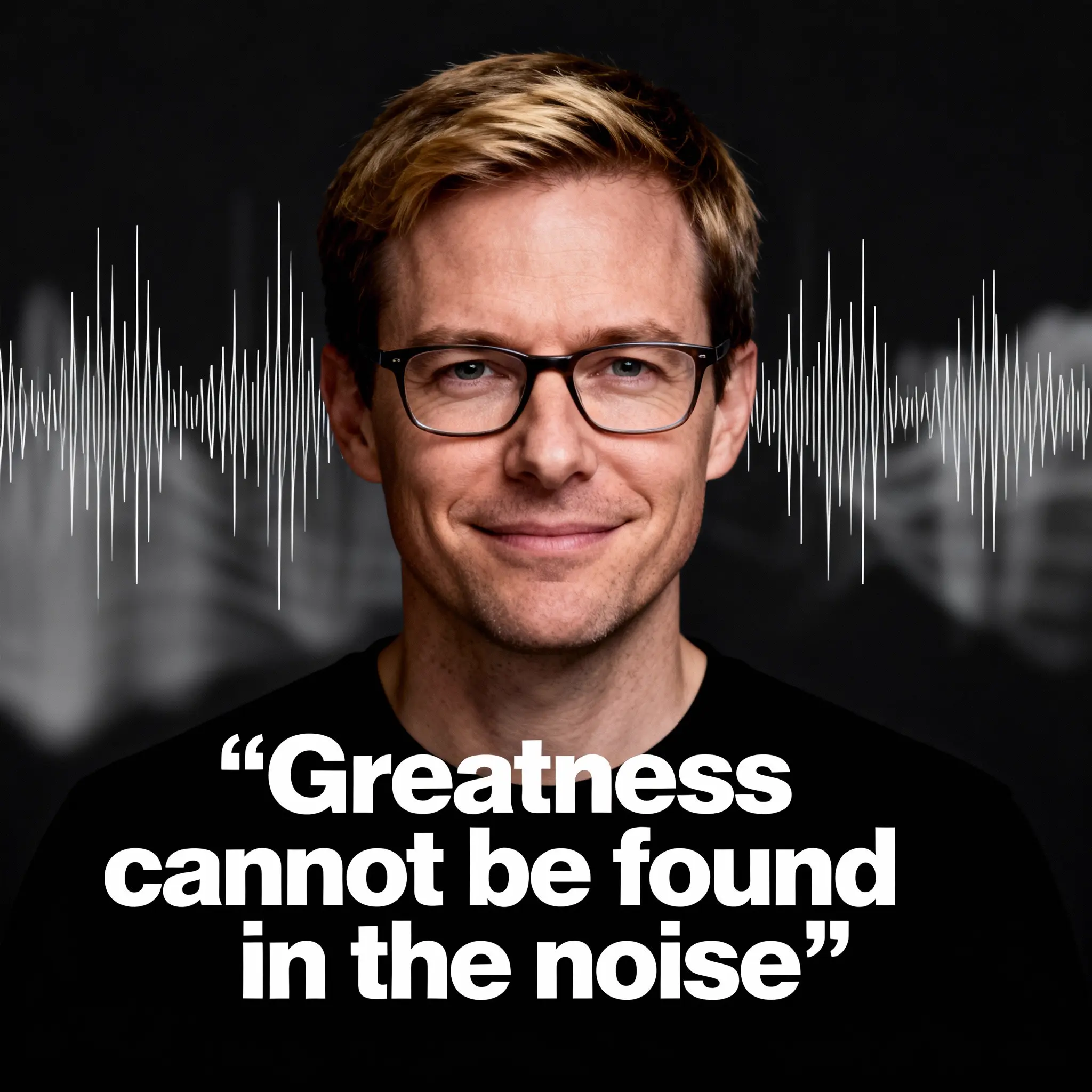
His success with Basecamp and HEY is proof that less stimulation often leads to more significant output. He essentially operationalizes “boredom” by making his work environment deliberately quiet and slow-paced compared to the frantic norm of Silicon Valley.
The Spiritual Dimension: Yoga and Al-Khalwa (الخلوة الروحية) 🔗
This implementation of focus is not new; it is a rediscovery of ancient spiritual technology.
Al-Khalwa (Spiritual Solitude) 🔗
In Egyptian Christian and Islamic traditions, this practice is known as Khalwa. It is the deliberate act of seclusion, detaching oneself from the dunya (worldly life) and its distractions to focus solely on the Divine.
- The Goal: Just as hyperfocus aims for task mastery, Khalwa aims for Tazkiyah (purification of the heart).
- The Method: By removing the “noise” of people and society, the internal whispers of the heart become audible. It is a “planned boring time period” for the ego, starving it of social validation so the soul can connect with higher truths.
- The Result: Practitioners return from Khalwa with immense clarity, renewed energy (qudra), and a “spiritual hyperfocus” that aligns their actions with their purpose.
Yoga and Pratyahara 🔗
Similarly, in Yoga, the path to enlightenment requires Pratyahara—the withdrawal of the senses. You cannot achieve Samadhi (bliss/flow) without first shutting out the external world. A yogi holding a difficult pose or sitting in meditation is essentially practicing “deliberate boredom”—refusing to scratch an itch or shift gaze—to discipline the mind into a single point of focus (Ekagrata).
Implementation: How to Achieve Top-Tier Goals 🔗
To achieve greatness in any field, you must integrate these “focus time spans” into your routine. Here is how to operationalize the concept:
1. Schedule “Nothing” Blocks 🔗
Top performers don’t just schedule work; they schedule the “void”. Block out 2–4 hours where you are unreachable. No internet, no phone, no meetings. DHH advocates for this by treating your time as an unshareable resource.
2. Embrace the Agitation 🔗
When you sit down to write, code, or think, and you feel the urge to check your phone, recognize that urge as the Boredom Barrier. Do not give in. That feeling is the brain “detoxing” from dopamine. Success lies on the other side of that 20-minute window.
3. Single-Tasking as Worship 🔗
Whether you are praying or programming, treat the task as a singular object of worship. In Khalwa, the focus is God; in Deep Work, the focus is the craft. The psychological mechanism is identical: total immersion leading to the dissolution of the self.
Conclusion 🔗
The “Hyperfocus” state is not a gift; it is a biological reward for enduring the discipline of silence. Whether you call it Deliberate Boredom, Flow, Khalwa, or Deep Work, the principle remains the same: Greatness cannot be found in the noise.
To achieve top-tier goals, you must be willing to be bored. You must be willing to disconnect from the hive mind to reconnect with your own potential. As DHH and spiritual masters alike demonstrate, the most productive thing you can do is often nothing but the one thing that matters.
I hope you enjoyed reading this post as much as I enjoyed writing it. If you know a person who can benefit from this information, send them a link of this post. If you want to get notified about new posts, follow me on YouTube , Twitter (x) , LinkedIn , and GitHub .